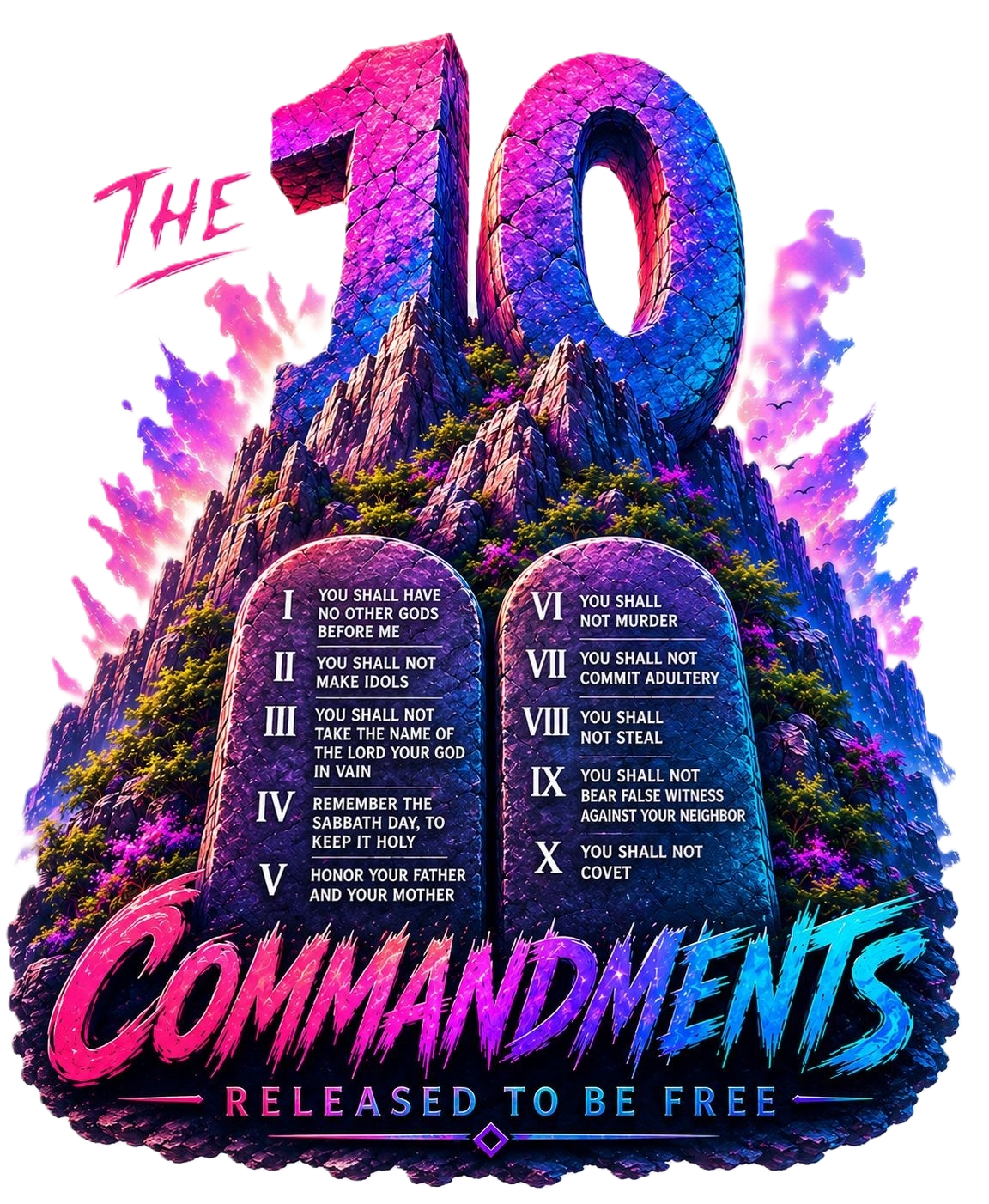
The Ten Commandments
Released to Be Free
Ten ancient words. One modern journey.
Freedom isn’t the absence of boundaries — it’s the presence of the One who sets you free.
Ten ancient words. One modern journey.
Freedom isn’t the absence of boundaries — it’s the presence of the One who sets you free.
The commandments were carved in stone — but they were always meant to carve something in us. They are not relics. They are not restrictions. They are a roadmap out of bondage and into freedom.
This ten‑week journey reframes the commandments as ten invitations: ten steps out of chaos, ten anchors for the soul, ten ways to live free.
Gather. Engage each week’s teaching and read the Scriptures.
Reflect. Use the take‑home guide to wrestle, journal, and pray.
Practice. Live out one bold, simple challenge every week.
Everyone builds their life around something — success, comfort, approval, control. The first command calls us to reorder our loves and return to the only One who gives life instead of draining it.
Reflection Moment: What is quietly taking first place in my life?
Weekly Challenge: Identify one competing “god” and dethrone it this week.
Tagline: Freedom begins with first place.
Identify one “competing god” and intentionally dethrone it.
The first commandment is about ordering your loves. When God is first, you become more grounded, less anxious, more whole, and more free. This isn’t about perfection — it’s about direction.
“God, reveal anything in my life that has taken Your place. Give me the courage to put You first in every area of my life.”
Idols aren’t just statues — they’re the ways we reshape God so He fits our preferences. When we reduce God, we reduce ourselves. This command invites us to let God be bigger than our expectations, our comfort zones, and our control.
Reflection Moment: Where am I trying to make God fit my terms?
Weekly Challenge: Surrender one area where you’ve been trying to control God.
Tagline: Let God be God.
Surrender one area where you’ve been trying to control God.
Write it down, name it, and pray over it every day this week.
Idols promise control but deliver emptiness. Letting God be God means trusting His character even when you don’t understand His timing.
“God, forgive me for trying to shrink You to my size. I surrender my expectations and invite You to be fully God in my life.”
God’s name isn’t just a word; it’s His character, His reputation, His presence. Honoring His name means aligning our words, actions, and attitudes with who He is.
Reflection Moment: Do my words reflect the God I claim to follow?
Weekly Challenge: Speak intentionally — no careless words, no empty promises, no cheap talk.
Tagline: Carry His name with honor.
Practice intentional speech.
Honoring God’s name isn’t just about avoiding certain phrases — it’s about living in a way that makes His name beautiful to others.
“God, may my words reflect who You really are. Teach me to carry Your name with reverence, joy, and integrity.”
Sabbath isn’t a suggestion — it’s a gift. A weekly reminder that you are not a machine, not defined by productivity, and not held together by your own strength.
Reflection Moment: What keeps me from resting?
Weekly Challenge: Practice one intentional Sabbath moment — no work, no screens, no striving.
Tagline: Stop. Breathe. Remember who holds you.
Create one intentional Sabbath moment.
Sabbath is a weekly protest against the lie that your worth is your work. Rest is not laziness — it’s trust.
“God, teach me to rest in You. Help me release control and remember that You are the One who holds my life together.”
Honor isn’t blind obedience — it’s choosing respect, gratitude, and humility. Whether your family is healthy or complicated, this command invites you to break cycles, build bridges, and sow honor into the future.
Reflection Moment: What does honor look like in my family story?
Weekly Challenge: Offer one act of intentional honor — a call, a thank‑you, a boundary, a prayer.
Tagline: Honor heals what history broke.
Offer one act of intentional honor.
Honor doesn’t erase pain or excuse harm. It’s choosing to respond in a way that reflects God’s heart, not just your history.
“God, You know my family story. Show me how to walk in honor, healing, and wisdom — even where things are broken.”
Jesus expands this command beyond violence — to anger, contempt, bitterness, and the quiet ways we “kill” people in our hearts. God calls us to be people of peace, repair, and reconciliation.
Reflection Moment: Who am I holding anger against?
Weekly Challenge: Take one step toward reconciliation — a conversation, a prayer, a release.
Tagline: Choose life in every interaction.
Take one step toward reconciliation.
God takes anger seriously because He takes people seriously. Choosing reconciliation doesn’t mean ignoring justice — it means refusing to let hatred rule your heart.
“God, reveal where anger has taken root in me. Give me the courage to choose peace, healing, and forgiveness.”